
ERP Therapy for OCD
Types of OCD: Common Themes and How They Can Overlap
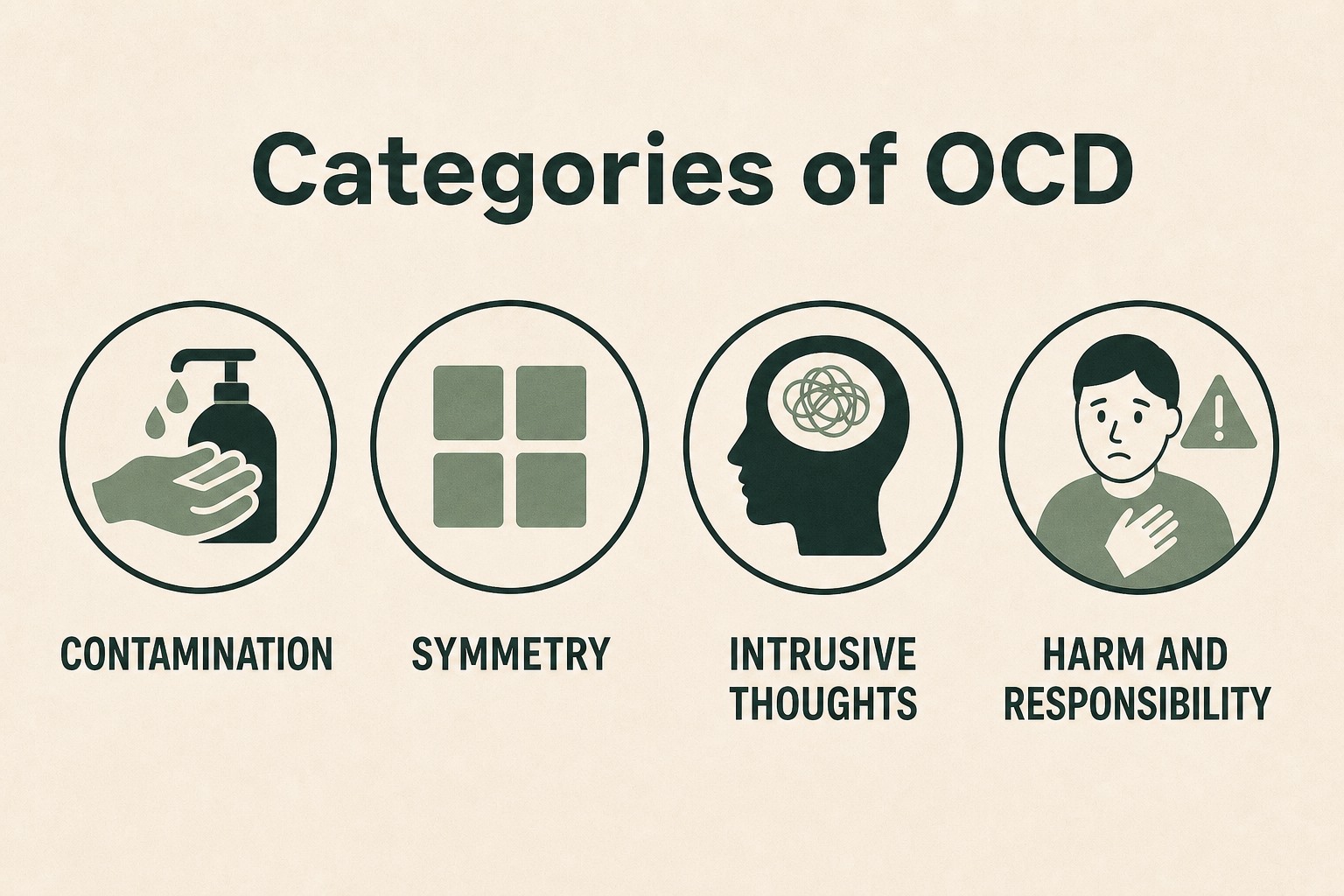
People often search for “types of OCD” to find a name for their experience. Terms such as contamination OCD, harm OCD, or relationship OCD describe common themes. They are not separate diagnoses, and themes can overlap or change.
Assessment looks at the pattern of obsessions, compulsions, distress, and interference with life. You do not need to fit neatly into one theme to seek help.
Contamination and washing
Contamination OCD can involve fears of germs, illness, substances, or a persistent feeling of contamination. Responses may include repeated washing, cleaning, avoidance, or tracking where contact might have spread.
Normal hygiene is not a compulsion simply because it involves cleaning. The function and extent of the behavior matter.
Checking, harm, and responsibility
Harm OCD can involve unwanted doubts about causing harm, losing control, or failing to prevent an accident. Compulsions may include repeated checks, reassurance, or reviewing intentions and memories.
A thought alone cannot establish OCD or determine safety. A clinician considers the wider pattern and any actual risk concerns.
Symmetry and just-right feelings
Just-right OCD may involve arranging, repeating, counting, or correcting until something feels complete. There may be no clear feared disaster. The incomplete feeling itself can drive repetition.
Relationships, morality, and unwanted taboo thoughts
Relationship OCD can involve repeated checking of feelings or commitment. Scrupulosity involves moral or religious concerns surrounded by rituals. Unwanted sexual or other taboo thoughts may also become the focus of obsessions and mental checking.
The content is only one part of assessment. A therapist also asks what you repeatedly do to settle it.
Sensorimotor and hyperawareness concerns
Sensorimotor OCD can focus on awareness of breathing, blinking, swallowing, or similar experiences. Repeated monitoring and attempts to make awareness disappear may become central to the loop. Physical symptoms still need appropriate assessment.
What does “pure O” mean?
People sometimes use this term when compulsions are mostly internal. Mental rituals, such as reviewing or silently reassuring oneself, can be difficult to recognize. A lack of visible rituals does not mean there is nothing to address in treatment.
Do different themes need different treatment?
ERP can be tailored to different OCD presentations, with the actual exercises based on individual needs. Understanding the theme can help you explain symptoms, but identifying the compulsions guides the work.
Start with the OCD treatment overview. The article on why compulsions feel helpful explains a process shared across themes.

Matthew Baker, LCSW
California Licensed Clinical Social Worker #121926 specializing in ERP for OCD and anxiety and Prolonged Exposure for PTSD. View Matthew's profile.