
Pure O OCD Treatment with ERP Therapy
Pure O OCD can make unwanted thoughts feel urgent, dangerous, and impossible to stop. The compulsions are often hidden because they happen inside the mind.
Pure O is not OCD without compulsions. It is OCD where the compulsions are often mental, subtle, or private. You may look calm on the outside while spending hours analyzing, checking, reviewing, praying, confessing, researching, or trying to prove you are safe.
What Pure O OCD Can Feel Like
Pure O OCD often centers on thoughts that feel disturbing, unwanted, or inconsistent with your values. The thoughts may involve harm, sexuality, morality, relationships, religion, identity, health, reality, or whether you are secretly a bad person.
The fear usually is not just that the thought happened. The fear is that the thought might reveal something true about you, your intentions, your identity, your morality, or your future behavior.
Common Pure O themes
- Fear of harming someone or losing control
- Fear that a thought means you are immoral or dangerous
- Sexual intrusive thoughts that feel unwanted or alarming
- Religious or moral fears about sin, guilt, or being bad
- Relationship doubt and constant checking of feelings
- Existential fears about meaning, reality, or consciousness
- Fear that you are not anxious enough, which becomes another form of checking
Common mental compulsions
- Rumination and repeated mental review
- Checking whether you feel guilty, anxious, aroused, loving, certain, or normal
- Trying to prove you would never act on a thought
- Mentally replaying memories to see what really happened
- Comparing your thoughts to other people’s thoughts
- Praying, neutralizing, replacing, or correcting thoughts
- Searching online for reassurance
- Confessing or asking others whether you are okay
Pure O Is Not “Purely Obsessional”
The label Pure O can be misleading. Most people with Pure O do have compulsions. They are just harder to see because they often happen internally.
This page focuses on covert responses such as rumination, mental review, neutralizing, and internal checking. For a broader explanation of unwanted thoughts across OCD themes, read about Intrusive Thought OCD.
OCD sends an intrusive thought. Anxiety rises. The mind tries to solve the discomfort through analysis, reassurance, checking, or avoidance. Relief may come briefly. But the brain learns that the thought was dangerous and needed to be answered. That keeps the cycle alive.
ERP Therapy for Pure O OCD
Exposure and Response Prevention helps you practice facing intrusive thoughts, images, urges, doubts, and uncertainty without doing the mental rituals that keep OCD active.
For Pure O, ERP often focuses on response prevention first. This means learning to identify rumination, reassurance seeking, checking, avoidance, confession, and mental review as compulsions.
Exposure work may include scripts, imaginal exposures, real-life triggers, uncertainty statements, values-based practice, and structured exercises that help you stop responding to intrusive thoughts as threats.
Intrusive Thoughts vs. Intentions
Intrusive thoughts are common. OCD makes them feel meaningful, urgent, and morally loaded. A thought can feel intense without being a desire, intention, warning, memory, or identity.
Treatment does not require you to prove that the thought is false. In fact, the repeated attempt to prove safety often becomes the compulsion. ERP helps you practice allowing uncertainty while choosing behavior based on values instead of fear.
Pure O OCD may be present when:
- The thought feels unwanted and distressing
- You feel pressure to figure out what the thought means
- You repeatedly check your feelings, memories, or reactions
- You ask for reassurance but never feel certain for long
- You avoid people, places, media, objects, or topics that trigger the thought
- You spend significant time analyzing whether you are safe, good, normal, or certain
When related concerns need a different approach
Replaying conversations also occurs in social anxiety. Repeatedly reworking an answer may involve perfectionism. Treatment follows the function of the mental review, not just the fact that you overthink.
Your OCD Therapist in California
I’m a California therapist who specializes in evidence-based treatment for OCD, intrusive thoughts, anxiety, and related compulsive patterns. Pure O often requires a therapist who understands mental compulsions, not just visible rituals.
Therapy is structured, active, and focused on helping you reduce compulsions, tolerate uncertainty, and return to the parts of life OCD has been narrowing.
Credentials and affiliations
- Matthew Baker, LCSW
- California Licensed Clinical Social Worker #121926
- Advanced training in Exposure and Response Prevention
- Professional member, International OCD Foundation
- Professional member, Anxiety &. Depression Association of America
- HIPAA-compliant telehealth across California
For the Thoughts You Keep Trying to Solve
Pure O OCD can make you believe certainty is one more analysis away. ERP helps you step out of the mental loop and practice responding to intrusive thoughts with less fear, less checking, and less rumination.
Hidden compulsions
“Pure O” is an informal term—not obsession without compulsion
People use “Pure O” to describe OCD in which compulsions are mostly internal or difficult to see. The term is not a separate diagnosis. Recognizing the mental response is important because rumination, review, testing, neutralizing, and self-reassurance can maintain the same cycle as visible rituals.
Common mental compulsions
- Replaying memories or conversations
- Analyzing what a thought means
- Reassuring oneself internally
- Replacing or neutralizing an unwanted thought
- Checking feelings, intentions, attraction, memory, or bodily reactions
- Repeating prayers, phrases, or images silently
- Comparing present reactions with earlier ones
Why it can be missed
A person may appear still while spending hours reviewing, testing, or solving internally. Avoidance, online research, confession, and subtle questions may be the only visible clues. The distress may be substantial even when no obvious ritual is present.
| Productive reflection | Compulsive rumination |
|---|---|
| Has a defined purpose and can stop without a perfect feeling. | Repeats the same material and demands certainty or relief. |
| May lead to a decision or useful next step. | Usually creates another question, exception, or need to review. |
| Can coexist with uncertainty. | Feels necessary before attention can return to life. |
Clinical source: International OCD Foundation overview of obsessions and compulsions. Only a qualified professional can diagnose OCD.
Ask about current appointment availability during your consultation.
Ready to take the next step?
Start with a free 15-minute consultation. We will look at fit, goals, and whether this type of treatment makes sense for you.
Schedule a free 15-minute consultationPure O OCD FAQ
What is Pure O OCD?
Pure O OCD is a common term for OCD where the compulsions are often mental or hidden. The person may experience intrusive thoughts and then respond with rumination, checking, reassurance seeking, avoidance, confession, or mental review.
Is Pure O OCD really OCD?
Yes. Pure O involves obsessions and compulsions. The difference is that the compulsions may be less visible than washing, checking locks, or arranging objects.
Can ERP work for mental compulsions?
Yes. ERP can target mental compulsions directly. Treatment helps you identify when you are ruminating, checking, neutralizing, confessing, or trying to solve uncertainty, then practice not performing those responses.
Do intrusive thoughts mean I secretly want something?
Not necessarily. Intrusive thoughts are not the same as values, intent, desire, or identity. OCD often targets what matters most to a person and then demands certainty about it.
Will therapy make me talk about every intrusive thought in detail?
Therapy should be structured and clinically appropriate. You do not need to confess every thought for treatment to work. The goal is to understand the OCD pattern and reduce compulsions.
Where do you provide Pure O OCD therapy?
Whatif Therapy provides ERP therapy for Pure O OCD through secure telehealth across California, including Los Angeles, Long Beach, Orange County, San Diego, San Francisco, Sacramento, and the Inland Empire.
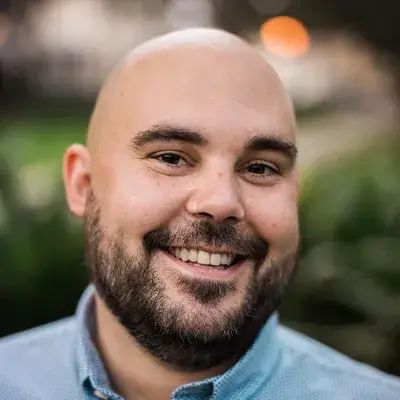
Matthew Baker, LCSW
California Licensed Clinical Social Worker #121926 specializing in ERP for OCD, exposure-based therapy for anxiety disorders, and Prolonged Exposure for adult PTSD. View Matthew's professional background.
Content reviewed August 2026.