
Whatif Therapy ERP · PE · Telehealth CA
Online ERP therapy in California

Harm OCD Treatment with ERP Therapy

Harm OCD and Responsibility OCD involve intrusive fears about causing harm, making a catastrophic mistake, or failing to prevent danger.

ERP therapy helps you reduce checking, reassurance seeking, avoidance, mental review, and repeated attempts to prove that everyone is safe.

What is Harm OCD?

It is not just danger. It is fear, doubt, and responsibility.

Harm OCD is a theme within Obsessive Compulsive Disorder where a person experiences intrusive fears about causing harm, losing control, making a mistake, or failing to prevent something bad from happening.

Responsibility OCD often overlaps with Harm OCD. The fear may focus on being responsible for an accident, fire, illness, injury, or another person’s safety.

The person may know the fear sounds excessive. But still feel driven to check, review, avoid, or seek certainty.

Common compulsions

  • Checking locks, appliances, roads, messages, or memories
  • Reassurance seeking about whether harm occurred
  • Mental reviewing of what happened or what might have happened
  • Avoiding driving, knives, children, pets, responsibility, or being alone
  • Confessing, retracing steps, or repeatedly asking others to confirm safety
Signs and symptoms

How Harm and Responsibility OCD often show up

Intrusive fears

  • Fear of hitting someone while driving
  • Fear of leaving the stove, candle, door, or appliance unsafe
  • Fear of accidentally harming a child, pet, family member, or stranger

Checking and reviewing

  • Repeatedly checking mirrors, roads, locks, appliances, or messages
  • Mentally replaying events to make sure nothing bad happened
  • Searching for certainty that you did not make a dangerous mistake

Avoidance and reassurance

  • Avoiding driving routes, responsibility, or being near feared objects
  • Asking others if things are safe or if you did anything wrong
  • Feeling unable to move on until you feel completely certain

Examples of Harm and Responsibility OCD

  • Driving back to check whether you hit someone
  • Repeatedly checking the stove, locks, candles, outlets, or appliances
  • Fear that you caused a fire, accident, injury, or illness
  • Avoiding knives, balconies, roads, children, pets, or vulnerable people
  • Reviewing conversations to make sure you did not say something harmful
  • Checking the news, police reports, or online information for reassurance
  • Feeling responsible for preventing every possible danger
Why it feels so real

The fear often targets responsibility and safety.

Harm OCD often attaches to the possibility of being responsible for something terrible. Because safety and morality matter, the doubt can feel urgent and convincing.

The problem is not that you are careless or dangerous. The problem is that OCD demands impossible certainty before it will let you move on.

Over time, checking and reassurance can make ordinary uncertainty feel like evidence of danger.

The OCD cycle

How checking keeps Harm OCD going

Checking can reduce fear for a moment. But it teaches the brain that the situation was dangerous and that checking was necessary.

Each time you check, review, confess, or ask for reassurance, the brain becomes more sensitive to future doubt. This keeps the responsibility cycle active.

The loop

  • Intrusive doubt about causing harm or missing danger
  • Fear, guilt, urgency, or responsibility
  • Checking, reviewing, avoiding, confessing, or reassurance seeking
  • Temporary relief
  • Stronger doubt the next time uncertainty appears
Exposure and Response Prevention

ERP helps you change your response to harm-related doubt.

Exposure and Response Prevention is the most effective evidence-based treatment for OCD. ERP does not focus on proving that no harm happened. It focuses on helping you face uncertainty without relying on compulsions.

In treatment, you gradually approach feared situations while practicing response prevention. This means reducing checking, reassurance seeking, avoidance, mental review, and repeated attempts to gain certainty.

ERP may help you practice how to:

  • Leave uncertainty unresolved instead of checking again
  • Drive without retracing routes for reassurance
  • Reduce repeated checking of locks, stoves, appliances, or messages
  • Stop mentally reviewing events to prove safety
  • Move forward without complete certainty

What ERP looks like in practice

ERP for Harm and Responsibility OCD is gradual, structured, and collaborative. You and your therapist identify triggers, checking rituals, avoidance patterns, mental review, reassurance seeking, and situations OCD has started to control.

Then you build exposure exercises that help you face harm-related doubt while reducing the compulsive behaviors that keep the cycle going.

Possible exposure examples

  • Driving without circling back to check
  • Leaving the house after one reasonable lock or stove check
  • Touching feared objects without reassurance seeking
  • Allowing uncertainty about whether something was done perfectly
  • Reducing online searches, confessions, or safety-checking rituals
Harm and Responsibility OCD FAQ

Common questions about Harm OCD and ERP

Is Harm OCD dangerous?

Harm OCD is not the same as wanting to harm someone. It involves unwanted intrusive fears and compulsive attempts to gain certainty that harm will not happen or did not happen.

Why does checking make OCD worse over time?

Checking can lower anxiety briefly. But it reinforces the belief that the situation was dangerous and that checking was necessary. This can make the doubt stronger the next time a similar trigger appears.

Does ERP mean becoming careless?

No. ERP is not about ignoring reasonable safety. It is about reducing compulsive checking, avoidance, reassurance seeking, and mental review that go beyond ordinary caution and are driven by OCD.

Is ERP effective for Harm OCD?

ERP is widely recognized as the most effective treatment for OCD, including harm and responsibility themes. It directly targets the fear and compulsion cycle that keeps OCD active.

Who is a good fit for ERP?

ERP may be a good fit if harm-related doubt, checking, avoidance, reassurance seeking, or mental review are interfering with your daily life, and you are willing to practice new responses between sessions.

How much does specialized ERP treatment cost?

Specialized ERP therapy often costs more than general talk therapy because it requires advanced training, structure, and clinical focus. For rates and insurance information, visit the fees and insurance page.
Related OCD themes

Harm and Responsibility OCD is one theme. OCD can show up in other ways too.

Many people experience more than one OCD theme over time. If harm-related doubt is part of your OCD, it may also help to learn how OCD shows up through intrusive thoughts, contamination fears, or symmetry and just-right concerns.

Intrusive Thoughts OCD

Learn how unwanted thoughts, images, or urges can become sticky when you respond with checking, reassurance seeking, avoidance, or mental review.

Contamination OCD

Learn how OCD can involve fears of germs, illness, bodily fluids, chemicals, environmental contaminants, washing, cleaning, avoidance, and reassurance seeking.

Symmetry and Just Right OCD

Learn how OCD can involve urges for things to feel even, balanced, exact, complete, comfortable, or just right before you can move forward.

California telehealth

ERP therapy for Harm and Responsibility OCD across California

If obsessive thoughts, anxiety, or compulsive behaviors are interfering with your life, ERP therapy can help you reduce checking, avoidance, reassurance seeking, and compulsive attempts to gain certainty.

Treatment is provided through secure online therapy for clients located in California.

Your therapist

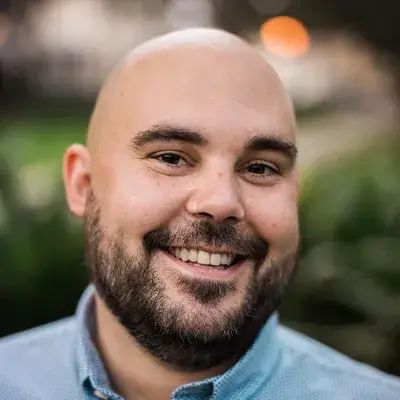
Matthew Baker, LCSW

Matthew Baker, LCSW CA #121926, provides structured online treatment for harm and responsibility OCD. Sessions focus on reducing checking, retracing, confession, reassurance seeking, and mental review while preserving reasonable everyday safety.

  • M.S.W., California State University, Long Beach
  • California Licensed Clinical Social Worker #121926
  • Advanced training in Exposure and Response Prevention through NOCD Academy
  • Professional and listed member, International OCD Foundation
  • Professional member, Anxiety & Depression Association of America
  • Fully insured and HIPAA-compliant telehealth
Next step

There’s a way to respond to doubt without checking again.

ERP therapy can help you reduce compulsions, avoidance, reassurance seeking, and mental review while building tolerance for uncertainty and responsibility-related fear.

Serving adults, teens, and children across California through secure telehealth.

Matthew Baker, LCSW

Written and reviewed by

Matthew Baker, LCSW

California Licensed Clinical Social Worker #121926 specializing in ERP for OCD and anxiety disorders and Prolonged Exposure for PTSD. View Matthew's professional background.

Content reviewed August 2026.

Talk with an OCD, anxiety, and trauma therapist

Ask questions about treatment fit, availability, fees, and secure telehealth anywhere in California.

Schedule a free 15-minute consultation