
OCD Treatment, ERP Therapy, Fees and Insurance
Private-Pay OCD Therapy: Is Specialist ERP Worth the Cost?

Finding an OCD therapist can be hard. Finding one with focused training in Exposure and Response Prevention, or ERP, may be even harder.
You may find a specialist who does not take your insurance. You may then wonder if private-pay OCD therapy is worth the cost. You may also have questions about superbills and out-of-network reimbursement.
Cost matters. Yet the fee for one session is only part of the picture. Treatment that costs less but does not address the OCD cycle can become more expensive over time. You may spend more money, lose more time, and remain stuck in the same pattern.
This does not mean private-pay therapy is always better. It means the treatment method and the therapist's training matter. ERP is a leading, evidence-based treatment for OCD. A trained ERP therapist should help you find the compulsions and avoidance that keep OCD going. Treatment should then give you a clear plan for changing those patterns.
What is private-pay OCD therapy?
Private-pay therapy is also called self-pay therapy. You pay the therapist directly instead of having the therapist bill your insurance.
Some people do not have insurance. Others have a plan that does not cover the therapist they want. Some choose not to use their benefits.
A private-pay therapist should explain the cost before treatment begins. You should know:
- The cost of the first appointment
- The fee and length of each session
- When payment is due
- How often you may meet
- Whether shorter sessions are available
- Whether the therapist provides superbills
- What happens if you cancel a session
Private pay only describes how you pay. It does not prove that a therapist is an OCD specialist. A high fee also does not guarantee better treatment. The therapist's training, experience, and plan matter more than the payment method.
Why does specialized OCD treatment matter?
Many therapists treat anxiety. Fewer have focused training in OCD and ERP. Supportive therapy can help with stress and other concerns. Yet OCD often needs a more specific approach.
OCD tends to follow a cycle:
- An intrusive thought, image, feeling, or doubt appears.
- Anxiety, guilt, shame, or discomfort rises.
- You perform a compulsion or avoid the trigger.
- You feel brief relief.
- The doubt returns and the cycle starts again.
ERP helps people face feared thoughts, feelings, or situations in a planned way. They also practice reducing the rituals that bring short-term relief.
The International OCD Foundation describes ERP as a first-line psychological treatment for OCD. Decades of research support its use with adults, teens, and children. Read the IOCDF guide to ERP.
No treatment works for every person. Results cannot be promised. Still, choosing a method designed for OCD can improve the chance that therapy addresses the right problem.
The most expensive therapy may be therapy that does not work
It is natural to compare therapists by session fee. That number is clear and easy to measure. The true cost of treatment is more complex.
A therapist may charge less but fail to notice reassurance seeking, mental review, or avoidance. You may feel supported in each session but continue the same rituals for months.
An OCD specialist may charge more per session. If that therapist finds the cycle and offers focused treatment, the higher fee may provide better value.
This is not a promise that higher-priced care will work faster. It is not a reason to select the most expensive therapist. The point is simple: the most expensive treatment may be the one that does not address the condition you are trying to treat.
When comparing your options, consider the therapist's OCD training, treatment plan, review of progress, likely schedule, and total cost over time. Price matters. Treatment fit matters too.
What may be different about specialist ERP?
An OCD specialist looks beyond the topic of an intrusive thought. The therapist also looks at what you do after the thought appears.
You might:
- Review a memory to make sure you did nothing wrong
- Ask someone to confirm that you are safe or good
- Search online until you feel certain
- Avoid a person, place, object, or feeling
- Repeat an action until it feels right
- Check your body or emotions for proof
- Confess past actions to reduce guilt
- Replace a “bad” thought with a “good” one
Some compulsions are easy to see. Others happen only in your mind. They may bring brief relief. That relief can teach your brain to repeat the ritual when doubt appears again.
A trained ERP therapist should help you identify both visible and hidden compulsions. The goal is not to prove that every fear is false. It is to help you live with uncertainty without letting OCD control each choice.
Learn more about how ERP therapy works.
Signs that past therapy may not be addressing OCD
Past therapy may have offered support or useful insight. Yet the main OCD pattern may still be active.
It may be time to consult an OCD specialist if:
- Sessions focus on proving that your fear is unlikely.
- You feel better after therapy but soon need more reassurance.
- You understand your anxiety but still perform the same rituals.
- Mental reviewing has not been identified as a compulsion.
- Each new obsession becomes the main topic of treatment.
- Therapy has no clear plan for reducing avoidance.
- Your therapist says they treat OCD but does not use ERP.
- You have gained insight but remain stuck in the same daily cycle.
This does not mean a former therapist provided poor care. Their method may not have been designed for OCD. Changing to focused care is not starting over. The insight you gained can still be useful.
When might private-pay ERP be worth it?
Private-pay OCD therapy may be worth considering when it gives you access to a therapist whose skills match your needs.
- Does the therapist treat OCD often?
- Can the therapist explain how ERP applies to your symptoms?
- Does the plan address mental and visible compulsions?
- Will treatment include practice outside sessions?
- How will progress be reviewed?
- Can you afford the expected schedule?
- Is a qualified in-network option available?
- Could you receive out-of-network reimbursement?
- Does the therapist provide the level of care you need?
Do not compare only the cost of one session. Compare the quality, focus, and expected course of care. No therapist can promise how many sessions you will need. A therapist should still explain how goals and progress will be reviewed.
Not sure whether specialist ERP fits your needs? A free 15-minute consultation can help you discuss treatment fit, expected costs, and current availability. The call does not require you to begin treatment.
Who private-pay ERP may—and may not—fit
| Private-pay ERP may fit when… | Another option may fit better when… |
|---|---|
| You cannot find a trained ERP therapist in network | A qualified in-network ERP therapist is available |
| Past therapy did not address your compulsions | Your current treatment is active and helping |
| You can manage the expected cost | The cost would cause serious financial strain |
| You want focused outpatient treatment | You need intensive, residential, or crisis care |
| The therapist's skills match your symptoms | You need a service the therapist does not offer |
| You accept that reimbursement is uncertain | You need predictable insurance coverage |
Private-pay care is one option. Choosing an affordable alternative does not mean you are less committed to treatment.
How do superbills and out-of-network benefits work?
A therapist who is not contracted with your insurance plan is an out-of-network provider. You normally pay the full session fee at the time of service. If your plan includes out-of-network mental health benefits, you may then ask the insurer to repay part of the cost.
- You attend the therapy session.
- You pay the therapist directly.
- The therapist gives you a superbill.
- You submit it to your insurer.
- The insurer reviews the claim.
- The insurer may send an out-of-network payment to you.
A superbill is a detailed receipt. It may list your name, the provider's details, service dates, fees, procedure codes, a diagnosis code, and the amount you paid.
A superbill is not another bill for you to pay. It is a document you may use to request possible reimbursement.
Does a superbill guarantee payment?
No. A superbill does not guarantee reimbursement.
Your insurer may pay the claim, deny it, or apply it to your out-of-network deductible. The result may depend on your plan's OON benefits, deductible, allowed amount, payment rate, visit limits, filing deadline, and prior approval rules.
The therapist cannot control the insurance company's decision.
What is an insurance allowed amount?
An allowed amount is the fee your insurer uses to calculate reimbursement. It may be lower than the therapist's fee.
Imagine that a therapist charges $250. Your insurer may set an allowed amount of $180. If the plan pays 60% after the deductible, it may pay 60% of $180—not 60% of $250.
- Therapist's fee: $250
- Insurer's allowed amount: $180
- Possible payment at 60%: $108
- Your remaining cost: $142
This is only an example. It is not a quote or promise of payment. Your plan might pay nothing until you meet your OON deductible. It could also deny the claim or exclude the service.
Questions to ask your insurance company
Call the member services number on your insurance card. Ask about outpatient mental health care from an out-of-network provider.
- Does my plan cover out-of-network mental health therapy?
- Do I have a separate OON deductible?
- How much of that deductible have I met?
- What percentage does the plan pay after the deductible?
- What is the allowed amount for the expected service code?
- Does my plan cover telehealth?
- Is prior authorization or a referral required?
- How do I submit a superbill?
- Is there a deadline for the claim?
- Will payment be sent to me?
- Can I get a reference number for this call?
A phone quote is not a guarantee. Your insurer makes the final decision after it reviews the claim.
For current Whatif Therapy rates, Aetna information, and superbill policies, visit the fees and insurance page.
Does a superbill include a diagnosis?
A superbill often includes a diagnosis code. The insurer may need it to process the claim. Submitting a superbill therefore shares some information about your treatment with your insurance company. The insurer may also ask for more records.
Ask your therapist what will appear on the document. You may choose not to submit it. This may offer more privacy from your insurer, but it also means you will not receive OON reimbursement.
What is a Good Faith Estimate?
If you do not have insurance or choose not to use it, you may have a right to a Good Faith Estimate. This document lists the expected charges for your care. It can help you plan for the cost of self-pay OCD treatment.
A Good Faith Estimate does not predict the exact length of therapy. Your needs and plan may change. Read the CMS information about self-pay billing rights or Whatif Therapy's Good Faith Estimate notice.
Questions to ask an OCD therapist
A consultation is a chance to learn how the therapist works. Consider asking:
- What formal ERP training have you completed?
- How much of your work involves OCD?
- How do you identify mental compulsions?
- How do you keep ERP from becoming another ritual?
- What happens during a typical session?
- How do you plan practice between sessions?
- How will we set goals and review progress?
- How do you respond when a client asks for reassurance?
- When would you recommend a higher level of care?
- What should I expect to pay during the first month?
The therapist should welcome these questions and give clear answers. ERP should be active and collaborative. You should understand the purpose of each exercise.
The decision is about value and fit
Private-pay OCD therapy is not always better than in-network treatment. Its main benefit is choice. It may allow you to work with a therapist whose ERP training matches your symptoms.
Before starting, confirm three things:
- The therapist has meaningful experience with OCD and ERP.
- You can manage the expected cost.
- You understand that superbill reimbursement is possible, not promised.
The goal is not to choose the most expensive therapist. It is to avoid spending time and money on treatment that does not address the OCD cycle.
Online private-pay OCD therapy in California
Whatif Therapy provides online ERP therapy for clients located in California. Matthew Baker, LCSW, works with adults, teens, children, and parents.
Whatif Therapy is in network with Aetna for eligible plans. Private pay is also available. Private-pay clients may request a monthly superbill for possible out-of-network reimbursement.
Start with a free 15-minute consultation. You can ask about treatment fit, current openings, private-pay costs, Aetna coverage, and superbills.
This article provides general education. It does not guarantee treatment results, insurance coverage, or reimbursement. Contact your insurer for information about your plan.
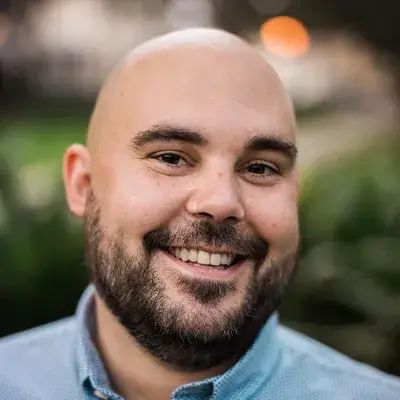
Matthew Baker, LCSW
California Licensed Clinical Social Worker #121926 specializing in ERP for OCD and anxiety and Prolonged Exposure for PTSD. View Matthew's profile.